Titanium or zircon implant?
An evidence-based comparison of both implant materials — with strengths, weaknesses, costs and a clear decision aid for your individual situation.
Contents of this guide
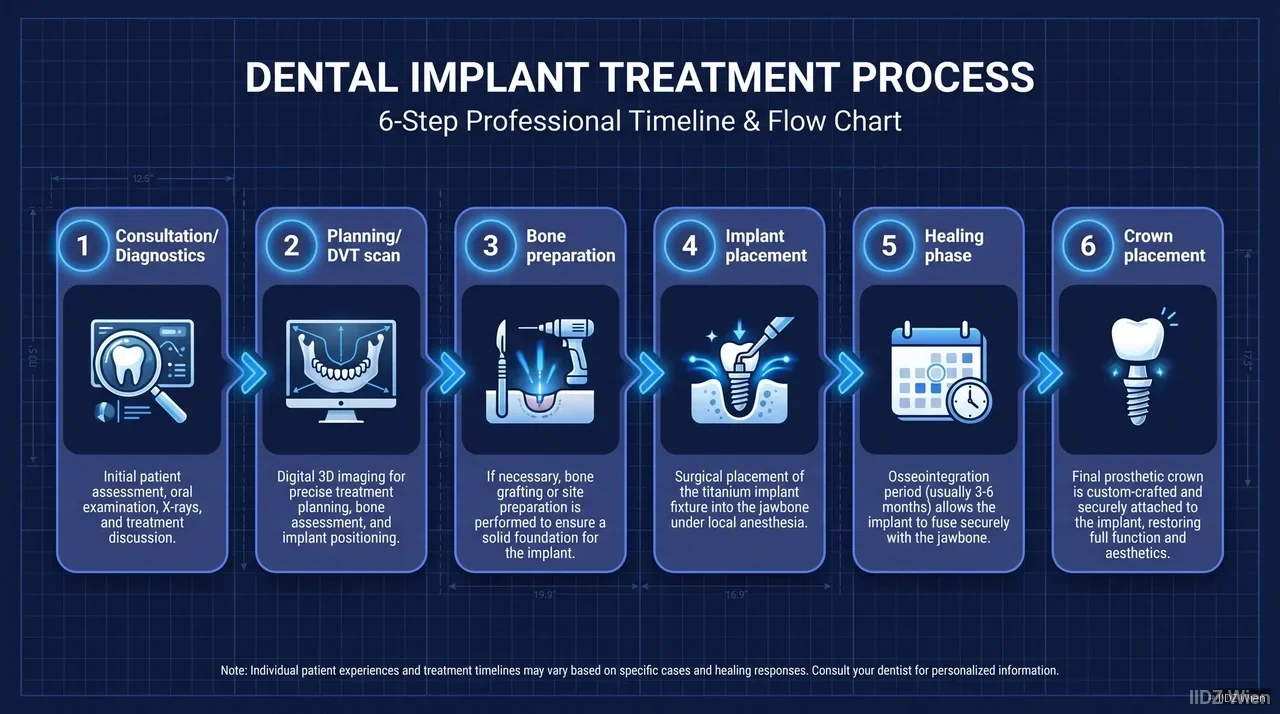
What is the difference?
Today, dental implants are made from two established materials: titanium (a metal alloy) and zirconium dioxide (a high-performance ceramic). Both integrate into bone (osseointegration), but differ significantly in material properties, aesthetics, costs and available evidence.
Titanium has been the gold standard in implantology for over 40 years. Zircon was developed in the 2000s as a metal-free alternative and has since established itself as a serious option — with growing, but not yet equivalent, evidence base.
Who is this decision particularly relevant for?
Patients with metal incompatibility
Those with suspected or confirmed titanium incompatibility should consider zircon as an alternative.
Aesthetically demanding cases
With thin or dark gingival biotype in the anterior region, zircon can prevent gray show-through.
Patients with bruxism
Severe teeth grinding increases fracture risk with zircon — titanium is mechanically superior here.
Patients with metal phobia
For patients with psychological concerns about metal in their body, zircon offers a completely metal-free option.
Strengths of both materials
Titanium implant
Proven & long-established
Over 40 years of clinical data, success rate >95 % after 10 years.
Osseointegration
Excellent bone integration through rough titanium surface.
More cost-effective
Generally €500–1,000 less per implant than zircon.
Broad indication
Suitable for nearly all bone situations and patient groups.
Zircon implant
Metal-free
Ideal for titanium allergy or metal incompatibility.
Aesthetics in anterior region
White material visible with thin gingiva — no gray margin.
Biocompatible
Very good tissue compatibility, less plaque accumulation in studies.
Growing evidence
Short-term results (5–10 years) comparable to titanium.
Direct comparison
| Criterion | Titanium | Zircon |
|---|---|---|
| Long-term experience | 40+ years of clinical data, gold standard | 10–15 years of data, growing evidence |
| Success rate (10 yrs) | ~97–98 % | ~95–98 % |
| Fracture risk | ~0.2 % fracture rate | ~0.6–1.2 % fracture rate |
| Aesthetics (dark gingiva) | Gray discoloration possible | No show-through, ideal |
| Metal-free | Metallic, but biocompatible | Completely metal-free |
| Costs (Vienna) | € 1,200–2,500 per implant | € 1,500–3,200 per implant (15–25 % more) |
| Osseointegration | Very well documented | Good, but fewer long-term data |
| Biofilm formation | Standard | Theoretically lower (clinically not significant) |
Bold = Advantage over the other material. Costs: Vienna 2025 reference values, without abutment and crown.
Limitations and risks
Titanium incompatibility
1–2 % of patients
Lymphocyte transformation test (LTT) possible, but diagnostically controversial
Higher fracture risk
0.6–1.2 % fracture rate
Usually abutment fractures, not the implant body itself
Limited long-term data
Max. 15 years of studies
Titanium has 40+ years of evidence; zircon data are growing but not yet equivalent
Smoking increases failure risk
Significantly increased
No material is superior to the other in smokers
Limited revisionability
Technically demanding
Replacement with titanium possible, but with additional surgical effort
What should be clarified beforehand?
Before deciding on a material, the following points should be clarified with your practitioner:
CBCT scan
Determine bone volume and quality to decide which implant design and material is possible.
Gingival biotype
Thin or dark gingiva speaks for zircon in the anterior region.
Chewing load & bruxism
Severe grinding significantly increases fracture risk with zircon.
Allergy testing
If titanium incompatibility is suspected: discuss LTT test (diagnostically controversial).
Smoking status
Smoking increases failure risk for both materials equally.
Budget planning
Zircon costs 15–25 % more — calculate total costs including abutment and crown.
Alternatives to implant restoration
Implants — regardless of material — are not the only way to replace missing teeth:
| Alternative | Advantage | Disadvantage |
|---|---|---|
| Bridge | No surgical intervention, proven | Grinding down healthy adjacent teeth necessary |
| Removable denture | Cheapest option, no surgery | Bone loss, limited wearing comfort |
| No restoration | No costs, no procedure | Bone loss, tooth migration, loss of chewing function |
What patients should generally know
Checklist: What should be clarified in advance?
Tap an item to check it off.
All prices stated on this page are average market reference values for the Austrian market (as of 2025). These are expressly not fixed prices of the Institute or any specific practice. Actual costs may vary significantly depending on clinical findings, scope of treatment, chosen material, and the individual practice. Binding cost information is available exclusively through a personalised treatment cost estimate (Heilkostenplan) from your treating dentist.
Clinical Partner
Consultation at Smile4Life
For a clinical assessment of your individual situation — in Vienna, 1010.
Medical note: The information on this page is for general educational purposes only and does not replace individual medical advice from a licensed dentist or specialist. The Institute for Implantology and Digital Dentistry Vienna is a non-profit, independent scientific platform — not a treatment facility. All content reflects current scientific literature; individual treatment decisions must always be made in consultation with a qualified dental professional.